
FORMAT: Text-based Interview
INTERVIEWED & EDITED BY: Samuel R. Lama
Welcome to our What Makes A… series! We shall begin our very first edition with Krisha Tamrakar, an esteemed figure in the Nepali creative community who is proficient in the ways of sharing her stories through vivid illustrations and weaving delightful words. We shall focus on the latter today, as Krisha will tell us what makes an author an AUTHOR, especially regarding the wondrous realm of children’s books!
LLAMSODA (LS): Greetings from Seoul! Once again, thank you so much for agreeing to do an interview with LLAMASODA! Please introduce yourself to our lovely audience (consisting of myself and probably my mother) and talk a little about your work as an illustrator and an author.
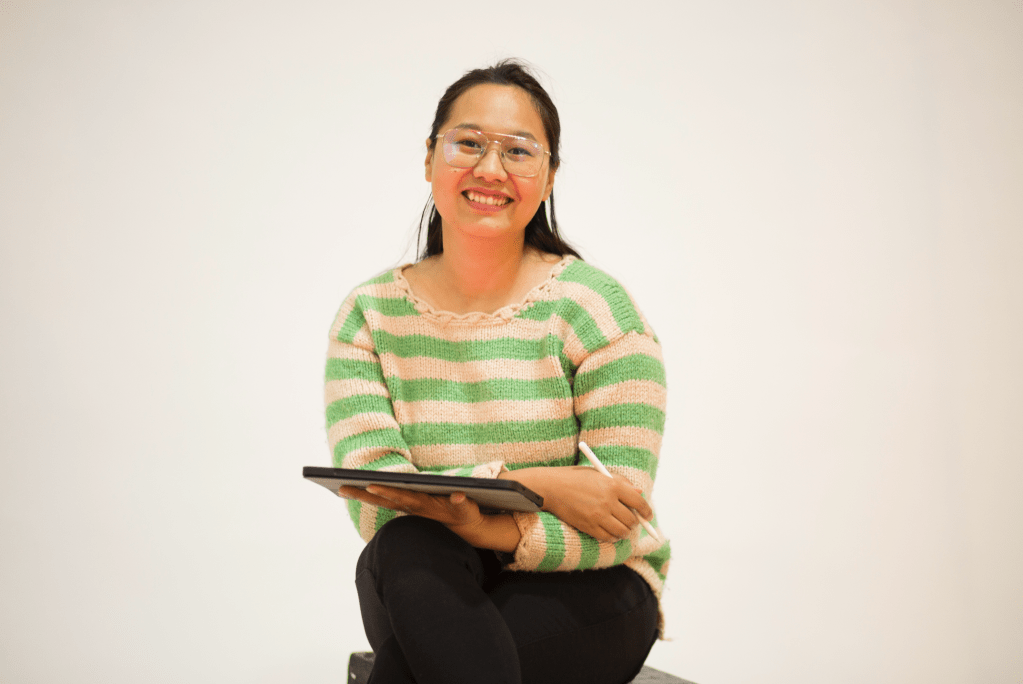
Krisha (K): Hello! I’m Krisha Tamrakar, an artist based in Kathmandu, Nepal, and co-director at Artudio, a center for contemporary arts. I graduated from Kathmandu University in 2018 with a Bachelor’s in Fine Arts and have been working professionally ever since as an artist/illustrator and sometimes author for crafting children’s books and artist books. I have been associated with Artudio since 2015 and have been part of its various curatorial projects along with art and education initiatives. And now, as mentioned previously, I am a part of Artudio not only as an artist but also as a co-director. I have also co-initiated a project, ‘I for Illustrators,’ to create a space for visual storytellers to learn, share, and connect.
To talk about my work, I enjoy blending contemporary themes with personal experiences that are mostly influenced by cultural history in my paintings and books. My creative expression explores change, growth, and beauty in everyday life through mixed media and digital paintings. Central to my work is visual storytelling where I share personal narratives and invite others to connect with my stories. I like to say the end of my story is the beginning of the reader’s, inviting them to continue the journey in their own way.
LS: Thank you! Now that introductions are out of the way, we’re going to begin right away with this question: what makes a children’s book author a children’s book author, in your opinion?
A: In my opinion, what makes a [children’s] book author successful is their ability to engage young readers in a conversation or exchange of ideas rather than dictating how they should think or feel. Giving readers space to think and imagine is the best possible way to create meaningful stories.
LS: What about the world of children’s books fascinated you to the point where you now have become a contributor to that world, if that makes sense?
K: What fascinates me about children’s books is how they can introduce young readers to storytelling as a powerful way to connect with the world around them. Growing up, I was surrounded by storytelling in many forms—listening to stories from elders, seeing sculptures and paintings in my city’s architecture, and attending the festivals we celebrate. These experiences showed me that storytelling can inspire curiosity, deepen understanding, and uniquely shape our lives.
Although I am drawn to all forms of storytelling, children’s books are especially rewarding to me because they capture universal emotions and experiences in simple yet impactful ways.
“…When I think of one thing that sets me apart as an artist and storyteller, it is my awareness that the present is deeply rooted in history.”
LS: In your opinion, what is one (or more!) aspect of your creativity and your work that sets you apart from your peers?
K: I’ve never really considered what sets me apart from my peers until now. But now, when I think of one thing that sets me apart as an artist and storyteller, it is my awareness that the present is deeply rooted in history. Growing up in Kathmandu, I was and still am inspired by traditional storytelling, and I believe that just as these historical stories are recorded, it’s equally important to capture the stories of what is happening in the present—to me and around me. This perspective shapes my work as I try to reflect both the heritage that grounds us and the unique experiences of today.
Additionally, my background in graphic design allows me to approach my book from a holistic, creative perspective. As an author and illustrator with a design degree, I can design my books, ensuring the visual and narrative elements work seamlessly together.
I believe children deserve meaningful content that isn’t ‘dumbed down,’ and I try to achieve this balance in my books.
LS: As someone who aims to become a children’s book author someday (that “someday” will probably be even farther than the day flying cars will be a reality), I often find myself researching and reading tips and advice online. One piece of advice that stuck with me was that the author must treat the younger audience the same as an adult audience and find a balance where the content is simplified and understandable but not “dumbed down,” if that makes sense. Do you agree with it, and have you ever had any challenges finding that balance?
K: I absolutely agree with the idea of treating a young audience with the same respect as an adult audience. I believe children deserve meaningful content that isn’t ‘dumbed down,’ and I try to achieve this balance in my books. Finding that balance can definitely be challenging, though. Sometimes, the concepts I want to explore are complex, and it’s hard to simplify them without losing the essence of the message.
One technique I use to find this balance is to simplify the language if I’m also writing the text while letting the illustrations convey more metaphorical or complex emotions. By expressing certain ideas visually rather than verbally, I can keep the language straightforward for young readers while still conveying deeper meanings in the artwork.
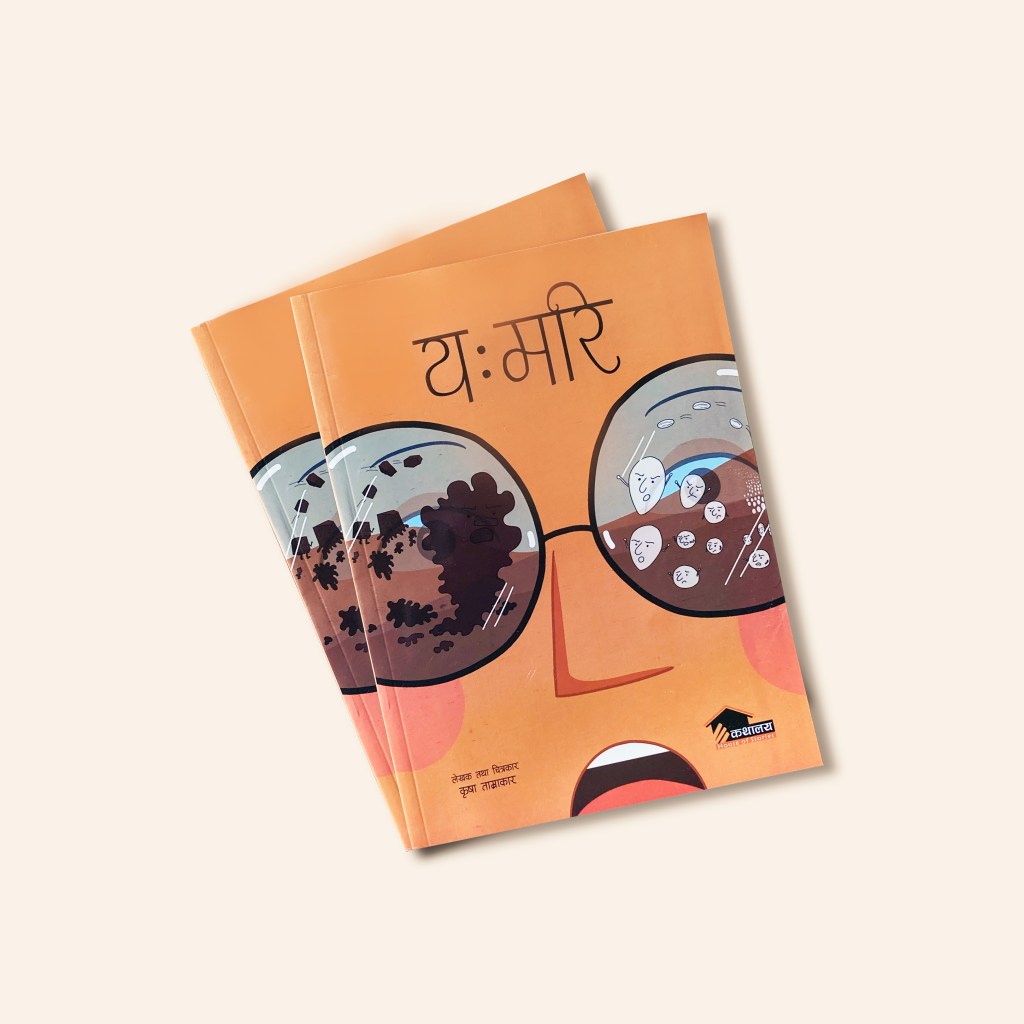
Another approach that helps me is through the workshops we conduct at Artudio. We do read-aloud sessions with my books and mentor children in creating their own picture books. For instance, in a recent workshop, we encouraged children to create stories inspired by my book. These interactions help me understand what resonates with young readers and give me insights into whether they grasp the ideas I’m trying to convey. This hands-on feedback allows me to refine my work and find the balance between simplicity and depth while also ensuring they are not too oversimplified.
LS: And while discussing advice and tips, what’s one less-known piece of advice you feel aspiring children’s book authors should know?
K: One piece of advice I’d give to aspiring children’s book authors is to spend time with your readers, whether it’s through workshops or just talking to them. Seeing how kids react to your stories, what they feel, and what they’re curious about can really help you improve your work. It shows you if your story connects with them and if you’re finding the right balance between making it simple enough for them to understand while also still being deep and meaningful.
“There were also personal challenges, like dealing with people who tried to discourage me or lower my confidence. What helped me during those tough times was focusing on the people who genuinely supported me and believed in my work. That encouragement made all the difference.”
LS: In your opinion, is it easier or harder to make it in the world of writing children’s books in the context of Nepal compared to other countries? And if you are comfortable with discussing about it, can you share the hardships you had to face in the course of your career?
K: I’d say it’s easier in some ways and harder in others. We have a smaller community in Nepal, so it’s easier to approach publishers and pitch ideas directly. We don’t have an agent system here like in many other countries, making it much simpler to contact publishers. But at the same time, this lack of structure brings its own challenges.
One significant hardship I faced was not knowing much about how publishing works, especially regarding contracts and pricing. Since we don’t have agencies to guide us, I often found myself confused and unsure if the deals I was getting were fair. This gap inspired me and a friend to start a project for illustrators and writers where we could share experiences and information to support one another.
There were also personal challenges, like dealing with people who tried to discourage me or lower my confidence. What helped me during those tough times was focusing on the people who genuinely supported me and believed in my work. That encouragement made all the difference.
Finally, I’ve faced resistance when pitching certain book ideas, especially those that didn’t follow traditional concepts or formats. It was hard to convince publishers to take a chance on something new, but persistence and belief in the work helped me push through.
LS: For some creatives, and perhaps it could be the case for you as well, what used to be their hobby is now what pays the bills. When your source of relaxation is now also a possible source of stress, you are twice as likely to experience burnout. What are your most reliable ways of de-stressing and returning to the action?
K: To relieve stress and avoid burnout, I rely on a few go-to activities that help me reset. Watching movies is one of my favorite ways to unwind and shift my focus. I also find that cleaning is surprisingly effective—it allows me to clear my mind and transform negative energy into a calm, refreshed state.
Another way I release tension physically and mentally is by practicing yoga and listening to mantras. Finally, I often change my creative medium. If I feel stuck or stressed in one type of work, I turn to art journaling. Journaling provides a space for free expression and lets me recharge my creativity without the pressures of a project.
LS: A spark of creativity can be triggered by anything, anyone, anywhere. But do you have any specific sources you go to when you need inspiration for a children’s book?
K: Honestly, inspiration can come from so many places! Sometimes, it’s the little things around me—like kids’ paintings, a random conversation, or even observing surroundings. Other times, it’s something that reminds me of a memory from my childhood or an experience from the past. Those moments have a way of sparking ideas that feel meaningful and relatable for kids.
“I want my work to be open, interactive, and communicative, inviting readers or the audience to become part of the artwork”
LS: Lastly, on your Artudio about page, you have a quote that says, “The end of my story is just the beginning of [the] reader’s story[.]”. Would you kindly explain a little more about what you meant by that?
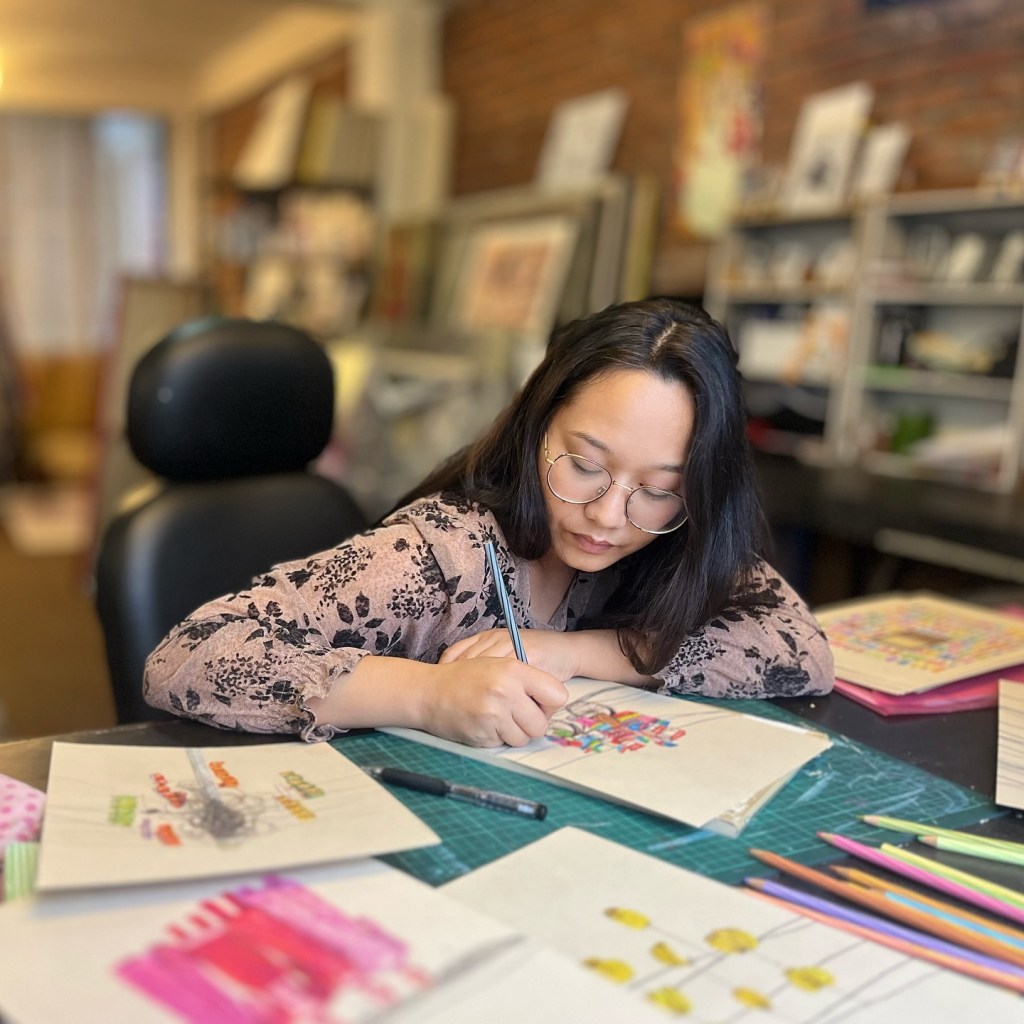
K: What I meant by ‘The end of my story is just the beginning of the reader’s story’ is that I want my work to be open, interactive, and communicative, inviting readers or the audience to become part of the artwork. I aim to create stories that people can relate to personally, where they might see reflections of their own experiences or memories.
For example, when I once shared a story with colleagues, they began telling their own stories of similar incidents, which made me realize how deeply connected they felt to my narrative. This response brought me so much joy and motivated me to continue creating works that spark personal reflection. I want my stories to encourage readers to remember their own experiences, emotions, or memories and to feel like they are part of the story itself. In this way, my story becomes a starting point for them to explore their own stories.
LS: Thank you so much for participating in this interview for the umpteenth time! It was an honor to learn more about you and your creative world, where you have made so many outstanding accomplishments. I’ll always cheer you on in your endeavors and wish you the best on your creative journey!
Visit kirimiri.com and artudio.net/krisha-tamrakar to discover Krisha’s portfolio and more about her!
Follow Krisha on Instagram to stay updated on her creative endeavors!
 LLAMASODA
Leave a comment